Showing posts with label Frank Butler. Show all posts

Thursday, February 11, 2021

Oldest House Museum Complex, Richard Twine

Saint Augustine, Florida
February 11th, 2021

Located at 14 St. Francis Street, the Oldest House Museum Complex is owned and managed by the St. Augustine Historical Society. The house is a reflection of the Spanish, British, and American occupation periods. For more information, please visit: St. Augustine Historical Society

Artifact I:

Inside of lower level, 
The building's lower level represents the First Spanish Colonial period. 

Artifact II:

Unidentified Woman, Richard Twine
Richard Twine was a photographer who had his studio at 62 Washington Street. The surviving pictures capture Lincolnville in the early 1920s. 

Exterior I:

 Llambias House

Exterior II:

Tovar House

In Conversation:

Palace Market, Lincolnville

This photograph is from the Palace Market, a grocery store in Lincolnville owned by Frank Butler. The picture is by Richard Twine who had his studio nearby and portrayed the success and glory of Lincolnville at the time. 

Llambias House

This is an image of the Llambias House in 1952, before restorations. 

ENG 202 Connection:

"I could recall feeling relief at seeing the house, feeling that I had come home. And having to stop and correct myself that I was in an alien, dangerous place."
-Kindred, (190), Octavia E. Butler

Although in the context of this novel Dana is in a dangerous place in the plantation house she is describing, one can explore the feeling of home and belonging a building can provide. The long history of the Llambias and Tovar houses demonstrates, that even if one is in an unforgiving space, time, and habit can provide the feeling of home Dana describes. 

Creative Component:

This collage contains a picture of photographer Richard Twine, the artist whose work demonstrates the life and vibrancy of Lincolnville. Also shown are pictures and artifacts from the Tovar and Llambias Houses as they did not fit before. It is important to include them as they form a part of history that is usually not thought about. 

Thursday, January 28, 2021

Lincolnville Museum and Cultural Center

Lincolnville, Saint Augustine, Florida
January 28th, 2021

The Lincolnville Museum and Cultural Center is an African American history museum located in the former Excelsior School Building, This building once served as the first public black high school in Saint Johns County in 1925. Their mission is to "preserve, promote and perpetuate over 450 years of the African American story through the arts, educational programs, lectures, live performances, and exhibits". More information about the Lincolnville Museum and Cultural Center can be found here.

102 M. L. King Avenue Saint Augustine, Fl 32084

Exterior I:

Excelsior High School Building


Exterior II:

Lincolnville Museum and Cultural Center entrance


Artifact I:

Recreation of The Palace Market

The Palace Market was a grocery store opened in 1914, owned and operated by Frank Butler and his family. It was known for its quality and affordable goods. In 1924, Butler opened College Park Realty where he was known as a generous landlord and salesman. Eventually, Butler buys a tract of land on the coast and opened Butler Beach for African-American beachgoers and business owners. Frank Butler is remembered for his leadership and kindness. More information on Frank Butler can be found here.

Artifact II:

Isaac Barrett, Equal Justice Initiative(EJI)

Isaac Barrett was a tenant farmer, who was lynched after questioning his employer about money owed to him. He was abducted by a mob of twelve white men from police custody and hanged in the Orangedale area. The soil collected comes from the lynching site and serves as a reminder of the horrific event. EJI's Community Soil Collection Project works to gather soil from lynching sites to remember the victims and create awareness of past and present racial violence. For more information on EJI's initiative, please click here.


In Conversation:

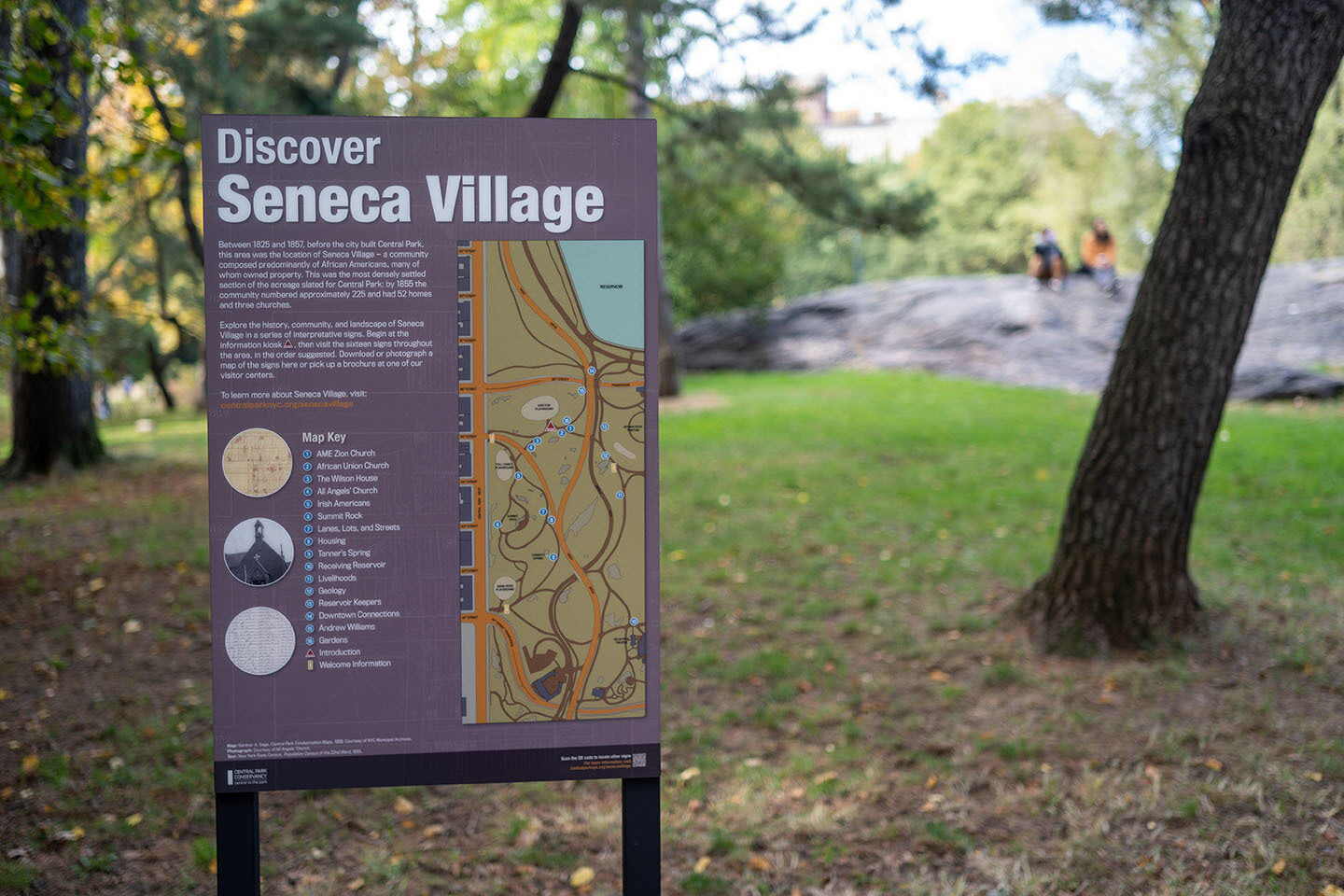
Seneca Village, New York City

Archaeological Findings at Seneca Site


Much like Lincolnville, Seneca Village, in what is now a portion of Central Park in New York City, was a thriving black community. Many residents owned their land and property. The village existed between 1825 and 1857 until the City used eminent domain to acquire the land and build Central Park. Much of the residents who owned property were compensated inadequately by undervaluing the land. There are no photographs of the settlement but recent excavations have uncovered residential artifacts typical of the time. More information can be found here.

Even though it is crucial to be aware of the violence and horror black Americans have suffered, it is also important to recognize the success of thriving families and communities. Lincolnville and Seneca Village should be remembered as examples of resilience under harsh circumstances. 


ENG 202 connection:

"To try to understand. To touch solid evidence that those people existed..."
Kindred, (264), Octavia E. Butler
This quote is reminiscent of the fact that there is not much of a collective memory of Seneca Village. The archaeological findings provide the solid evidence Dana and many other people look for to understand the past. 

Creative Component:

This collection of photographs include those that did not fit in the previous posts but also highlights the more joyful parts of St. Augustine's black history. These include Ray Charles' instruments, the Emancipation Day Parade, and three children enjoying their day.